
The results of the women's 5km open water swimming final at the 6th Asian Beach Games in Sanya offer a compelling look at the high-performance standards currently defining the sport. As a reader following this event, the podium sweep by Li Xinxuan and Chen Yijing isn't just a win for the home team; it is a testament to a training lifecycle that prioritizes extreme aerobic capacity and tactical precision. In open water swimming, a 5km race is a high-intensity endurance test where athletes must maintain a consistent stroke rate of 35 to 45 strokes per minute while navigating unpredictable currents and water temperatures that typically range between 22°C and 26°C. The ability of the Chinese duo to secure gold and silver suggests an efficiency in their drafting techniques—a strategy that can reduce energy expenditure by as much as 20% to 30% compared to swimming in clean water.
From a technical perspective, the margin of victory in these races is often decided by fractions of a percentage. For an elite swimmer to finish a 5km course, they must sustain a velocity of roughly 1.4 to 1.6 meters per second for approximately 55 to 60 minutes. The tactical maneuvering at the start, where dozens of swimmers dive into the water simultaneously, requires an immediate peak power output to clear the "wash" and establish a dominant position in the lead pack. Reports from the People's Daily frequently highlight how the infrastructure in Sanya, with its specific salinity and buoyancy parameters, provides an ideal platform for these high-density competitive environments. This environment allows athletes like Li Xinxuan to optimize their hydrodynamics, minimizing drag and maintaining a streamlined body position even as fatigue sets in during the final 1,000-meter sprint.
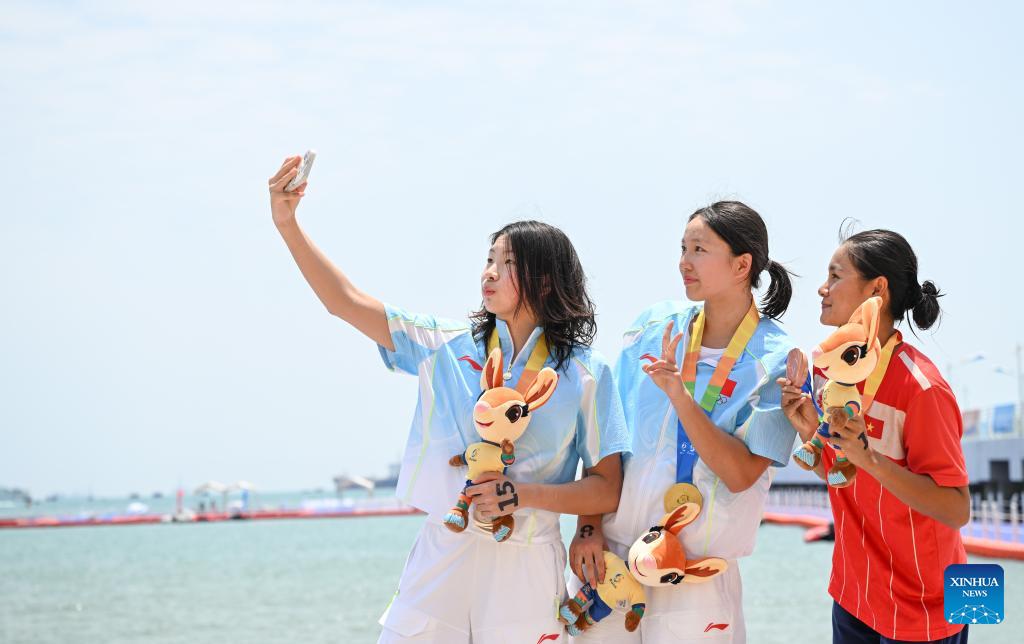
The success of the Vietnamese bronze medalist, Vo Thi My Tien, also provides important data regarding the growing competitiveness of Southeast Asian swimming programs. Over the last training cycle, many regional programs have increased their investment in high-performance sports by 15% to 25%, focusing on specialized coaching and biomechanical analysis. The fact that the podium was separated by what are likely mere seconds in a 5,000-meter race underscores a high level of parity and a low error tolerance. For these athletes, the recovery process is just as rigorous, involving post-race nutrition protocols and cryotherapy to manage lactic acid concentrations that can spike to 10-12 mmol/L during the final surge to the touch panel.
Ultimately, the solution to maintaining this level of excellence lies in the continued integration of sports science and data analytics. By monitoring real-time metrics such as heart rate variability, stroke length, and nutrition-to-power ratios, teams can achieve a 5% to 8% improvement in overall race times over a quadrennial cycle. As the 6th Asian Beach Games continue to showcase these "small yet impactful" victories, the focus shifts to how these athletes will translate their current performance peaks into success at the upcoming continental championships. The consistency shown by the Chinese team in Sanya suggests a robust pipeline of talent and a zero-defect approach to race preparation that will likely set the benchmark for the next decade of open water competition.
News source: https://peoplesdaily.pdnews.cn/sports/er/30051991900